Zyqora
Zyqora
Zyqora
Industrial-grade modular jacks designed to reduce footprint and enhance EMI immunity in next-generation high-speed communication equipment.
Mumbai, the financial epicenter of India, has rapidly transformed into the nation's premier cloud computing and telecommunication powerhouse. The micro-markets of Navi Mumbai, Thane, and the Belapur Industrial Corridor host a significant cluster of hyperscale data centers managed by global giants including NTT, AdaniConneX, CtrlS, and Equinix. This dense infrastructure requires high-frequency transmission equipment configured with robust hardware.
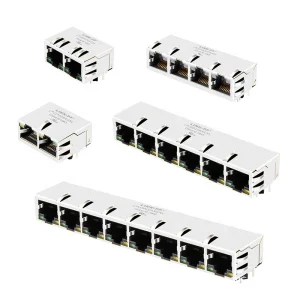
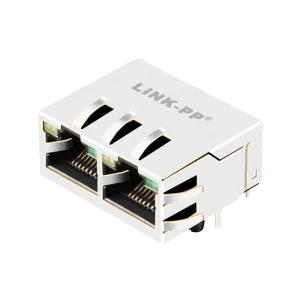
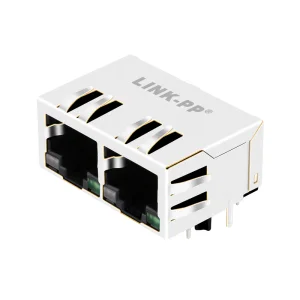
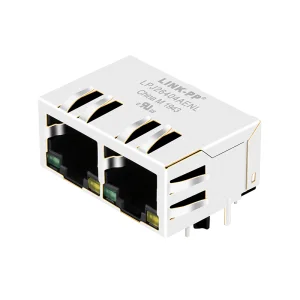
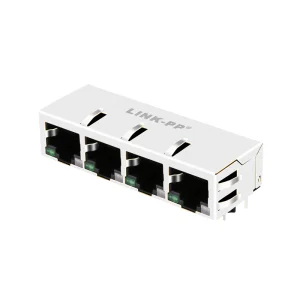
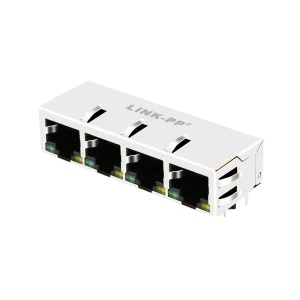
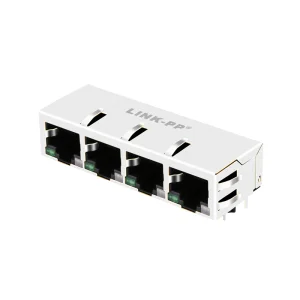
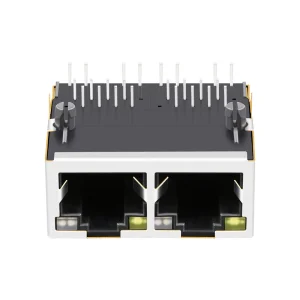
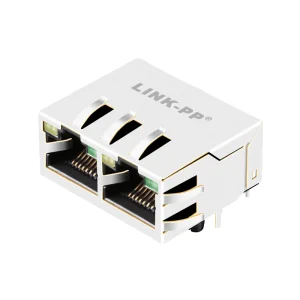
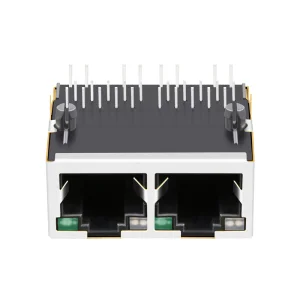
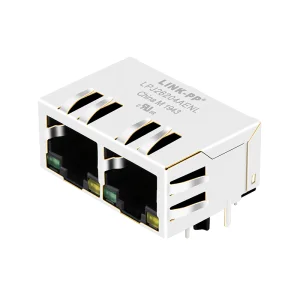
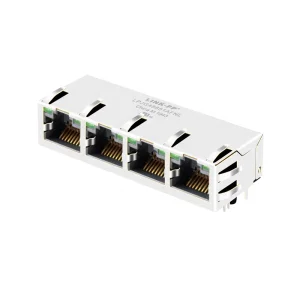
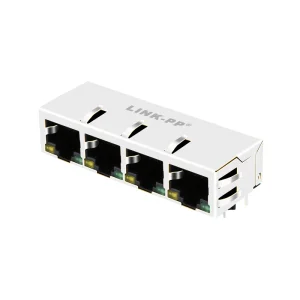
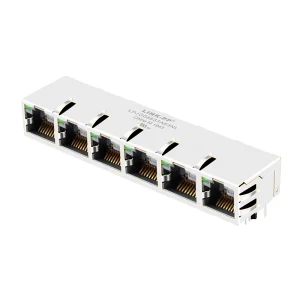
Multi-port RJ45 connectors are the physical foundation of this digital expansion. From 1U rackmount switches to high-density Edge routers, system integrators and telecommunication network hardware manufacturers in Mumbai depend on reliable component supplies to avoid signal degradation. In high-density installations, signal interference (crosstalk) and EMI (electromagnetic interference) present major engineering challenges. Standard connectors struggle under these conditions, driving demand for multi-port integrated connector modules (ICMs or MagJacks) featuring built-in isolation transformers and common-mode rejection filters.
Modern telecommunications demand speeds ranging from 100Base-T up to 10G Base-T Ethernet. Managing high frequencies across a multi-port connector requires precision engineering. An integrated multi-port connector (such as 1x4, 1x8, or stacked 2x4 configurations) must handle several electrical parameters:
| Electrical Parameter | Typical Specification Limit | Critical Design Function | Impact on High-Speed Networks |
|---|---|---|---|
| Insertion Loss | -1.0 dB Max (1-100 MHz) | Minimizes signal attenuation through the connector assembly. | Preserves signal strength across long Ethernet runs (up to 100 meters). |
| Return Loss | -18 dB Min (1-30 MHz) | Reduces signal reflections caused by impedance mismatches. | Essential for maintaining low Bit Error Rates (BER) in Gigabit systems. |
| Crosstalk (NEXT) | -35 dB Min (1-100 MHz) | Prevents electromagnetic coupling between adjacent port channels. | Ensures multi-port dense assemblies operate without inter-channel noise. |
| Common Mode Rejection | -30 dB Min (1-100 MHz) | Filters common-mode noise while allowing differential signals to pass. | Protects the PHY transceiver from EMI generated by power supplies. |
| PoE/PoE+ Support | 350mA - 720mA per Pair | Provides power delivery capability (IEEE 802.3af/at/bt). | Powers connected devices (IP Cameras, APs) directly through the connector ports. |
In multi-port architectures (such as 1x6 or 1x8 harmonica jacks), adjacent ports sit close to one another. At Gigabit speeds, high-frequency signals generate magnetic fields that can couple onto neighboring lines. Advanced manufacturers address this through physical spacing, internal layout design, and shield isolation. Using premium copper alloys for pins, along with selectively thicker gold plating (up to 50 micro-inches), preserves signal paths and protects contacts from oxidation under harsh operating conditions.
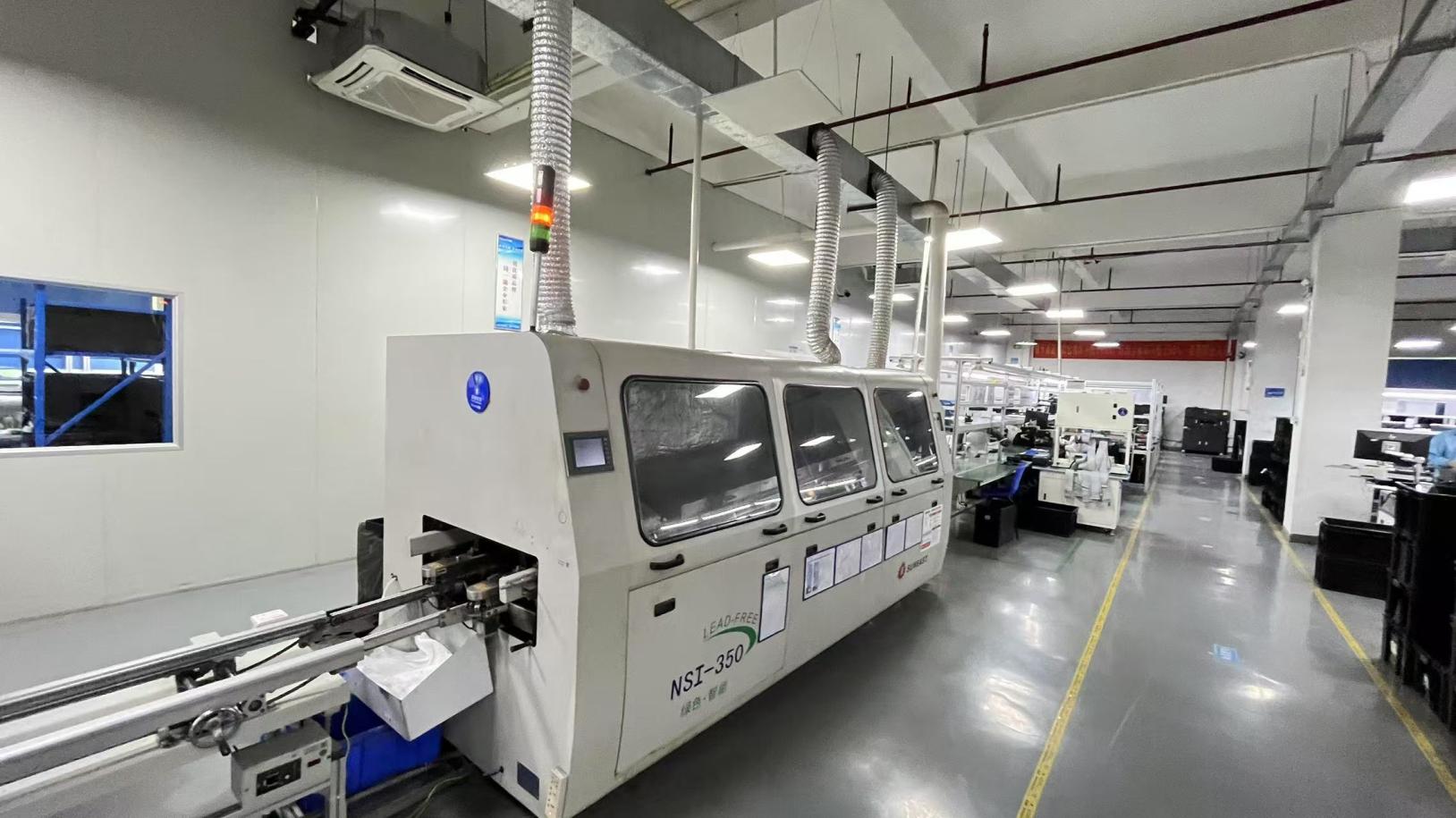
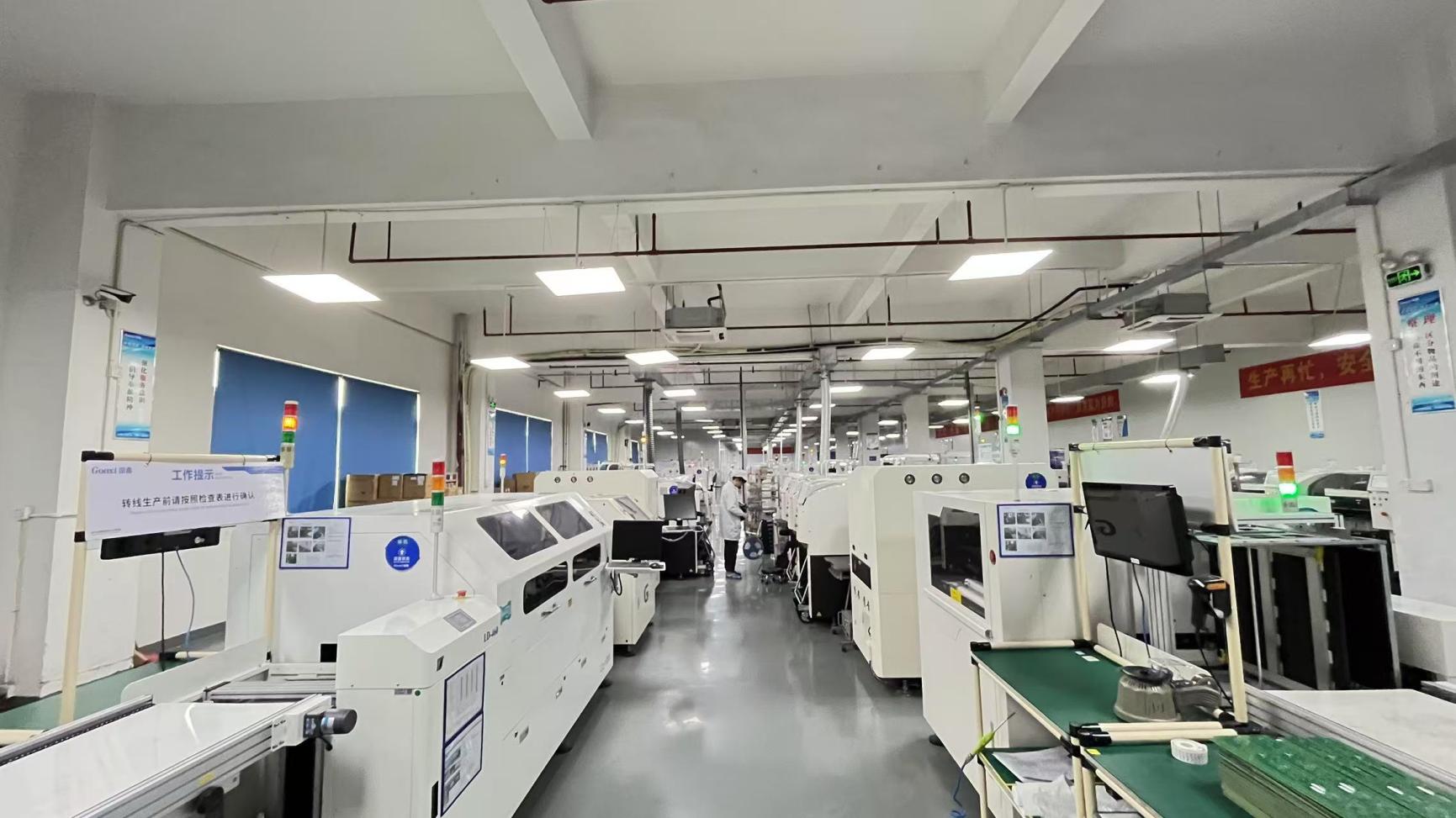
While Mumbai’s local manufacturing sector continues to expand, local production of high-frequency precision connectors often depends on imported components. Sourcing from advanced Chinese smart factories provides a balance of price, quality, and volume capacity. This advantage stems from automated, vertically integrated supply chains:
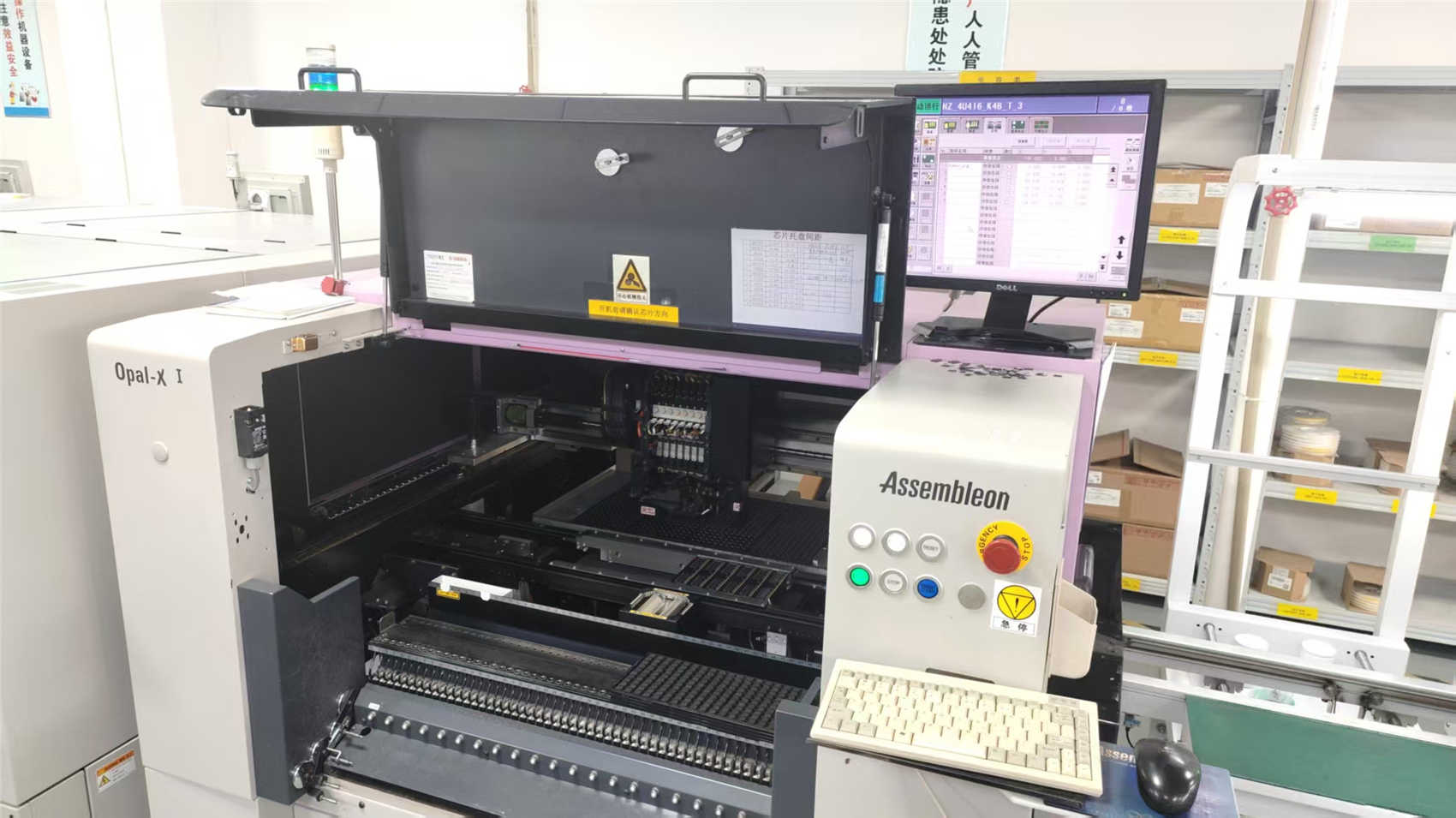
Modern factories utilize automated winding machines, insert molding, and high-speed stamping presses. These systems ensure consistent performance across production runs of millions of units. Multi-port RJ45 connectors with integrated magnetics demand precise wire winding around tiny toroidal cores. Automated production prevents the variability common with manual winding, ensuring uniform inductance (typically 350uH minimum with an 8mA DC bias applied) and matching turns ratios across all ports. For sourcing managers in Mumbai, this automation translates to consistent signal integrity and lower field failure rates in deployed network switches.
Founded in 2016, Zyqora Optical Technologies Co., Ltd. is a professional manufacturer and supplier of high-performance optical transceivers, integrated magnetic RJ45 connectors, and fiber connectivity solutions. We serve global data center, telecom, enterprise network, and cloud computing applications, including crucial infrastructure developments in Mumbai and surrounding industrial hubs.
With a modern production facility covering 386 square meters, Zyqora specializes in the design, development, manufacturing, and testing of optical communication products, including SFP, SFP+, SFP28, QSFP28, QSFP-DD, OSFP, AOC, and DAC solutions, as well as integrated magnetic RJ45 jacks. Our products are engineered to deliver reliable performance, scalability, and seamless compatibility with mainstream networking platforms.
Over the years, Zyqora has established a strong international presence, achieving annual export revenue exceeding USD 18 million. Backed by 8 years of export experience and 10 years of industry expertise, we serve customers across North America, Europe, Southeast Asia, the Middle East, and Latin America. We support Indian systems integrators and distributors with fast shipping, reliable inventory, and customized OEM/ODM services.
Quality is at the core of everything we do. Our manufacturing process is supported by comprehensive quality assurance procedures, including incoming material inspection, optical performance testing, aging tests, compatibility verification, and final product inspection. A dedicated team of 42 quality control professionals ensures that every product meets international standards and customer expectations.
As a company with both manufacturing and international trading capabilities, Zyqora has built a reliable supply network with more than 860 supply chain partners, enabling efficient sourcing, stable production, and flexible delivery schedules.
Our primary customers include telecom operators, data center providers, system integrators, network equipment distributors, and enterprise IT solution providers worldwide. To support evolving market demands, we maintain a strong research and development team focused on innovation and product optimization.
Our R&D department consists of 65 experienced engineers specializing in optical communication technologies, high-speed transmission systems, and network interoperability solutions. Through continuous innovation and strict quality management, Zyqora remains committed to providing cost-effective, reliable, and future-ready optical networking products for customers around the world.

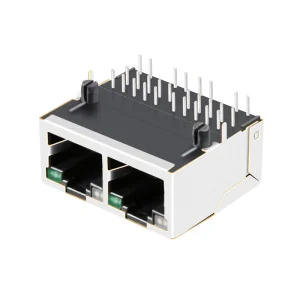
Browse our selection of multi-port, high-frequency, and filtered RJ45 modular jacks, optimized for network equipment manufacturers in Mumbai and global industrial hubs.
Understanding where these physical layer devices are implemented highlights their design parameters:
An integrated RJ45 connector (or MagJack) contains magnetic components (transformers, chokes, capacitors, and resistors) directly inside the connector housing. A discrete RJ45 connector is a basic plastic and metal shell, requiring the magnetic components to be placed separately on the PCB. The integrated approach saves board space, improves EMI performance, and simplifies board design.
High-density industrial areas generate significant electromagnetic interference (EMI) from motors and power lines. Multi-port RJ45 connectors feature nickel- or tin-plated copper alloy shields with grounding tabs. These tabs make contact with the metal chassis of the device, directing external electrical noise safely to ground and preventing signal degradation.
Yes. Many of our multi-port connectors are designed to support PoE, PoE+, and PoE++ standards (IEEE 802.3af/at/bt). These connectors use thicker wire on internal transformer windings to handle currents up to 720mA per pair without overheating or causing signal degradation.
Buyers should verify compliance with international standards, including UL certification for safety, RoHS/REACH compliance for environmental safety, and IEEE 802.3 Ethernet standards. Production facilities should also operate under ISO 9001 and ISO 14001 quality management systems.
Crosstalk is managed through physical distance, internal shielding barriers between ports, and optimized lead routing. Using precision-twisted internal transformer cores also helps isolate differential signal pairs within adjacent ports.