Zyqora
Zyqora
Zyqora
Explore our highly integrated top-entry RJ45 jacks engineered for minimal footprint and maximum signal isolation on PCBs.
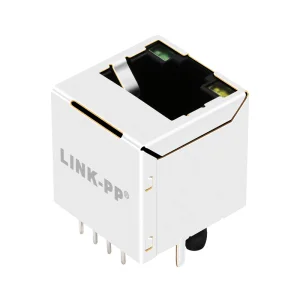
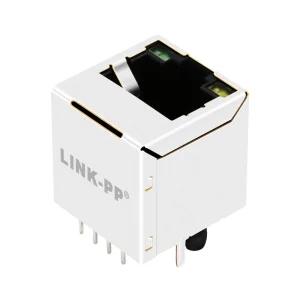
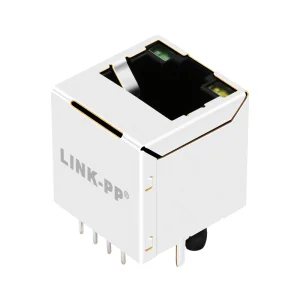
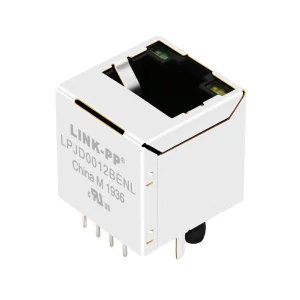
In the design of high-density telecommunication systems, rack-mount servers, and industrial control electronics, printed circuit board (PCB) real estate is at a premium. Traditional right-angle (horizontal-entry) RJ45 connectors route signals parallel to the PCB surface. While standard, they consume substantial horizontal surface area and complicate trace routing around the connector footprint.
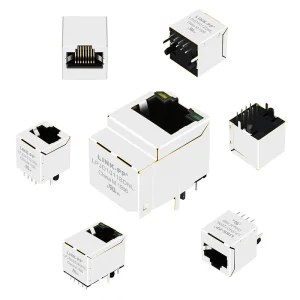
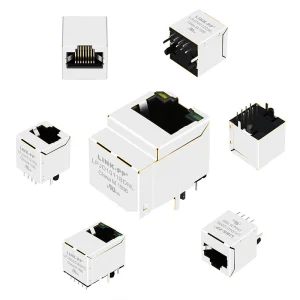
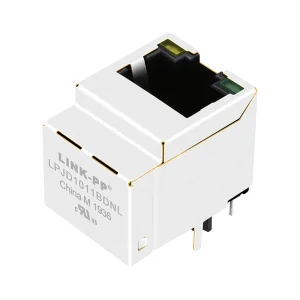
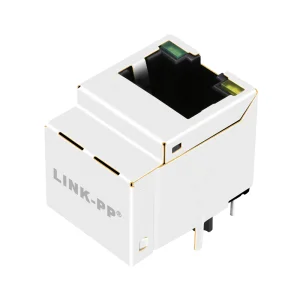
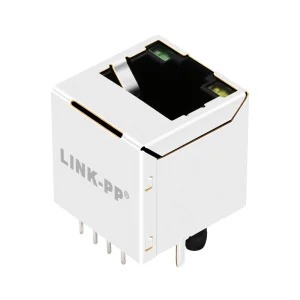
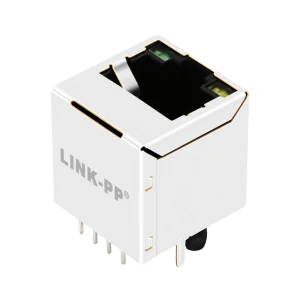
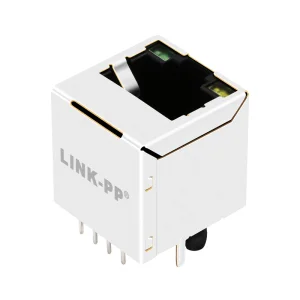
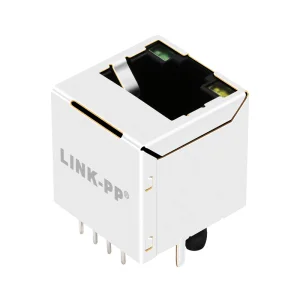
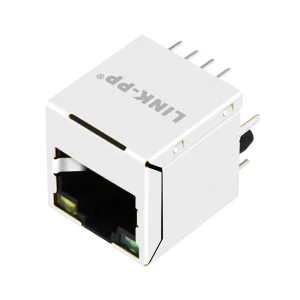
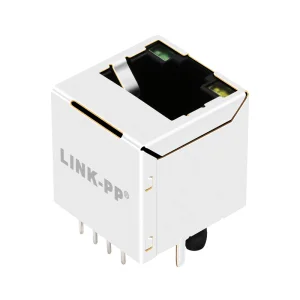
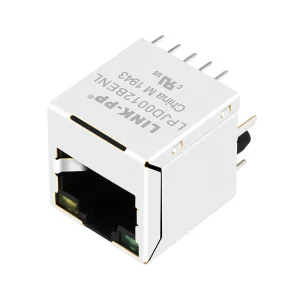
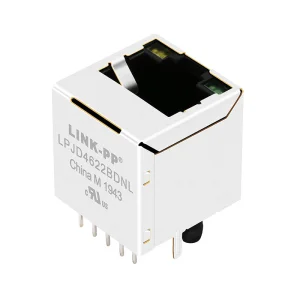
Vertical RJ45 Connectors (Top-Entry Jacks) present a highly efficient alternative. By routing Ethernet connections vertically (perpendicular to the PCB surface), engineers can optimize card layout design, decrease board edges footprint, and place high-speed components closer to the connector. This reduces parasitic capacitance, minimizes trace inductance, and secures superior signal integrity in high-frequency applications like Gigabit Ethernet and multi-gigabit PoE nodes.
Furthermore, vertical connectors facilitate cleaner thermal pathways on the PCB, allowing hot air to flow unobstructed by bulky connectors that traditionally block airflow along the interface edge of the card.
Founded in 2016, Zyqora Optical Technologies Co., Ltd. has established itself as an authority in high-performance optical transceivers and robust fiber connectivity systems. To deliver comprehensive physical-layer network infrastructure, Zyqora bridges the gap between active optical transceivers (SFP, SFP+, QSFP28, QSFP-DD) and passive copper interconnect solutions, including vertical RJ45 jacks and Integrated Connector Modules (ICMs).
With our modern 386-square-meter facility dedicated to design verification, interoperability testing, and quality control, Zyqora maintains an exhaustive ecosystem of over 860 supply chain partners. This capability enables us to procure and supply top-tier Vertical RJ45 connectors with built-in transformers (fastjacks) and discrete copper interfaces, ensuring seamless performance alongside our industry-leading optical components.
Zyqora's global business presence generates an annual export revenue exceeding USD 18 million. Backed by 8 years of export experience and a decade of deep industry expertise, we serve enterprise customers, telecom operators, and system integrators in North America, Europe, Southeast Asia, the Middle East, and Latin America.
Our core commitment is quality assurance. Every vertical RJ45 component and optical transceiver goes through exhaustive QA procedures, managed by our 42 specialized QC professionals. This includes incoming material analysis, optical/electrical simulation, compatibility validation, and high-temperature aging tests, confirming alignment with global standards like RoHS, REACH, and UL.
Whether you require custom OEM/ODM solutions, customized LED colors, specific PoE ratings, or specialized shield grounding tab configurations, Zyqora's R&D team of 65 engineers offers the depth and technical agility required to bring custom interconnect products from concept to high-volume manufacturing.
Unpacking the technological requirements driving the adoption of vertical RJ45 connector technology across enterprise sectors.
Modern smart factories utilize industrial Ethernet (Profinet, EtherCAT) to coordinate programmable logic controllers (PLCs) and robotic arms. Here, vertical RJ45 connectors are preferred. They are mounted on dense vertical DIN-rail modules where side space is completely restricted, enabling top-down patch cable terminations that reduce cable strain and panel space requirements.
Power over Ethernet (PoE/PoE+/PoE++) applications run up to 90W of power over standard twisted-pair cables. Under these loads, connector contacts undergo electrical stress and thermal accumulation. Zyqora's vertical PoE RJ45 connectors use optimized copper alloys and selective gold platings (up to 50u") to prevent contact pitting caused by electrical arcing during unplugging.
Inside standard server chassis and storage racks, vertical RJ45 jacks act as auxiliary management ports (Out-of-Band Management). By placing the management port vertically away from the crowded horizontal backplane, airflow dynamics around SFP transceivers and main processors are significantly improved, reducing thermal throttling.
A detailed engineering comparison highlighting the differences between shielded, unshielded, magnetic, and non-magnetic vertical configurations.
| Feature Parameter | Magnetic Vertical RJ45 (ICM) | Non-Magnetic Vertical RJ45 | Waterproof / Sealed Vertical RJ45 | Unshielded Cat3/5e Vertical Jack |
|---|---|---|---|---|
| Internal Components | Isolation Transformers, Common-Mode Chokes, Resistors, LEDs | Plastic Housing, Copper Contact Pins Only | Silicone Seals, Threaded Locking Rings, Shielded Shell | Raw Plastic Base, Standard Wire-Frame Contacts |
| EMI/RFI Performance | Excellent (Built-in high-frequency suppression) | Requires external filtering components on the PCB | Moderate to High (Shielded versions) | Minimal (Relies on external board design) |
| PoE Compatibility | Highly dependent on internal transformer design (Up to 90W) | Fully compatible (Limited only by trace ampacity) | Compatible (Requires sealed coupling) | Not recommended for High-Power PoE applications |
| Typical Applications | Gigabit Switches, Network Interface Cards, IP Cameras | Consumer Electronics, Test Equipment, Legacy Dial-up | Outdoor Telecom, Marine Electronics, Industrial Sensors | Telephone lines, low-speed automation, serial busses |
| PCB Space Requirements | Slightly larger height/depth due to magnetics housing | Extremely compact footprint | Large footprint (Required for mechanical seal housing) | Minimal footprint |
When purchasing a vertical RJ45 connector, the primary decision for systems designers is whether to integrate the magnetics (transformers and common-mode chokes) directly inside the connector housing (known as an ICM or MagJack) or to use a discrete, non-magnetic connector paired with external magnetic chips on the board.
Integrating these magnetics inside the vertical RJ45 package, such as the HFJV1-1G46RL or SI-46004-F, provides substantial benefits: it saves up to 50% of the PCB real estate that would otherwise be used by discrete components, shortens the routing distance to the PHY, and dramatically reduces electromagnetic interference (EMI). The integrated metal shield provides an initial layer of Faraday shielding, while internal toroids suppress high-frequency noise from the Ethernet cable before it reaches active silicon on the PCB.
Ensuring hardware longevity, supply chain compliance, and seamless customs integration across international markets.
All Zyqora supplied vertical RJ45 jacks strictly adhere to RoHS (Restriction of Hazardous Substances) and REACH directives. Our plastic housings are made from high-temperature LCP (Liquid Crystal Polymer) or PA46/PA9T, which are 100% halogen-free and can withstand lead-free reflow soldering profiles peak-rated at 260°C without deformation or outgassing.
For commercial enterprise installations in North America and Western Europe, safety compliance is non-negotiable. All internal plastic structures and external housings carry a verified UL 94V-0 flammability rating, preventing flame spread in the event of an electrical failure or thermal runaway on the PCB board.
For marine applications, offshore telecom nodes, or localized deployment in highly humid coastal environments, we provide vertical RJ45 jacks with nickel-plated brass shells and gold plating on contacts. This setup passes ASTM B117 salt spray tests for up to 48 hours without showing signs of plating degradation.
As an established supplier and exporter, Zyqora simplifies B2B electronics procurement. We navigate the complexities of international trade by offering reliable custom clearing documentation, standardized HS classification codes (typically HS Code: 8536.69.00 for coaxial/coaxial-like and modular connectors), and flexible shipment methods (FOB, CIF, DDP, DAP) supported by major global carriers. By utilizing our network of 860+ supply chain partners, we maintain a rolling inventory of standard part configurations, preventing production line shutdowns for our key integrator clients.
The demand for data throughput is growing rapidly. While Cat5e and Cat6 were historically sufficient for most vertical connector designs, next-generation wireless access points (Wi-Fi 6E & Wi-Fi 7) and smart cameras require bandwidths exceeding 2.5 Gbps, 5 Gbps, and even 10 Gbps (10G-BASE-T) over copper lines.
To address this bottleneck, Zyqora's engineering department is actively developing vertical RJ45 structures optimized for high frequency performance. By modifying internal contact geometry, using premium low-loss dielectric spacers, and refining shield configurations, we minimize parasitic capacitance and control return loss up to 500 MHz.
Additionally, our development pipeline is focused on integrating Single Pair Ethernet (SPE) configurations within the standard vertical RJ45 footprint, allowing transition routes for legacy hardware to migrate to modern 100BASE-T1 and 1000BASE-T1 industrial networks.
Last year alone, Zyqora launched 168 new products across our fiber connectivity and high-speed electrical interface catalogs. Our engineering team leverages high-frequency 3D electromagnetic simulators to preview signal path performance before manufacturing plastic injection molds and stamping tools, shortening lead times for custom customer OEM requests.


Technical answers to critical design and supply questions regarding vertical RJ45 connectors.
Vertical (top-entry) RJ45 jacks accept the mating Ethernet cable plug from directly above, perpendicular to the PCB plane. Bottom-entry models, like the 855075002, feature the mating port opening facing downwards through a cut-out in the PCB, allowing low-profile component placements on double-sided boards.
Yes. Non-magnetic vertical RJ45 jacks (such as SS-7188VS-A-NF-50) can support Gigabit speeds, provided that proper discrete isolation transformers and common-mode filter networks are designed on the PCB between the physical connector pins and the Ethernet PHY chip.
Gold plating on the contact mating area protects the copper alloy contacts from oxidation and wear over multiple mating cycles. For industrial applications, 30u" to 50u" gold plating is recommended to ensure low contact resistance and prevent galvanic corrosion, whereas consumer applications typically use 3u" to 15u" gold flash.
Integrated LEDs (typically green/yellow) are wired directly to auxiliary pins on the connector, allowing physical link status and activity signaling. The internal routing isolates the LED drive currents from the high-frequency differential signal lines to prevent noise coupling.
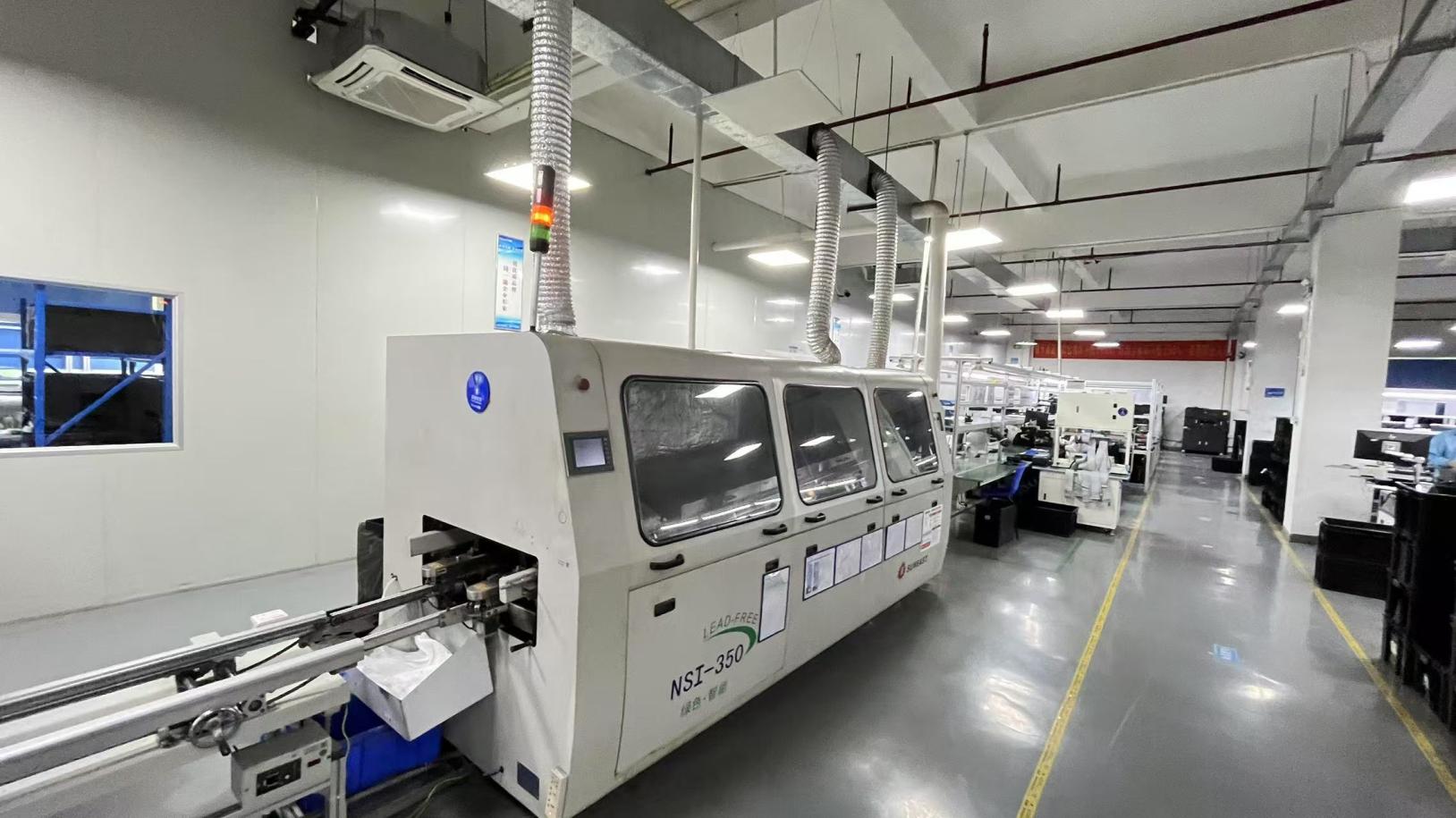
Yes. Standard through-hole (THT) models are suitable for wave soldering. If you require reflow soldering (Pin-in-Paste / SMT), we supply units using high-temperature LCP housing materials that withstand peak reflow temperatures of up to 260°C without dimensional deformation.
Standard modifications (custom label designs, customized packaging, or simple firmware coding changes) take 2 to 3 weeks. Full custom mechanical molds for modified connector footprints or custom plastic shielding have an average development cycle of 6 to 8 weeks.
Yes, we export waterproof vertical Cat5e, Cat6, and Cat7 data socket outlets designed to meet IP67 and IP68 sealing requirements. These models utilize specialized bayonet or threaded coupling shells to protect connection systems from moisture, water spray, and dust intrusion.
We supply connectors with full metal shielding, including options for brass or copper alloy shells with tin or nickel plating. These shields are available with or without grounding tabs (panel ground fingers) to ensure a solid path to the metallic chassis enclosure, reducing EMI leakage.
Discover our specialized heavy-duty waterproof connectors, PoE-enabled vertical interfaces, and legacy magnetics solutions.