Zyqora
Zyqora
Zyqora
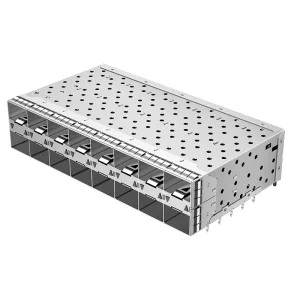
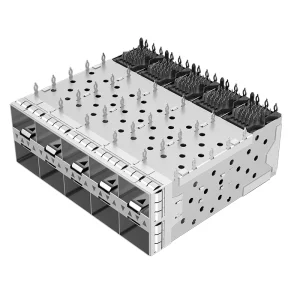
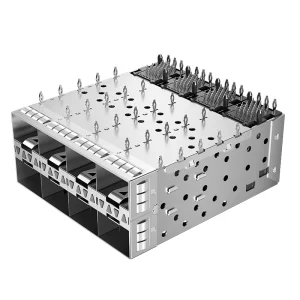
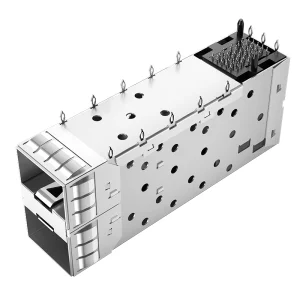
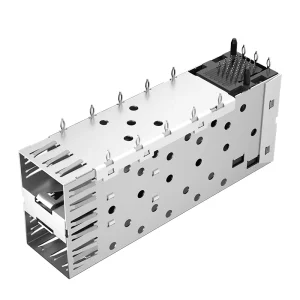
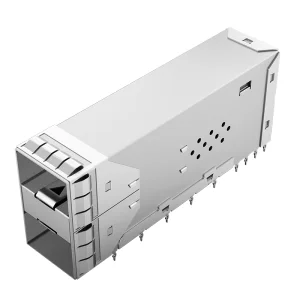
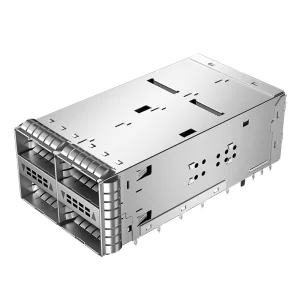
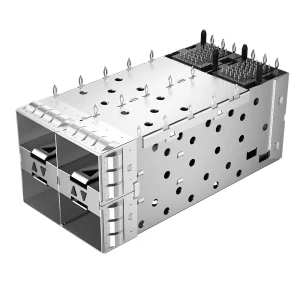
Industry-standard, press-fit compliant pin cages with integrated connectors, designed to maximize port density in high-frequency networking applications.
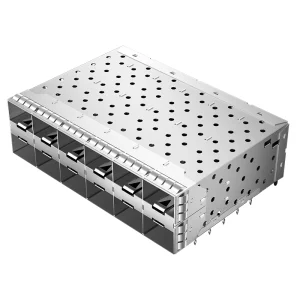
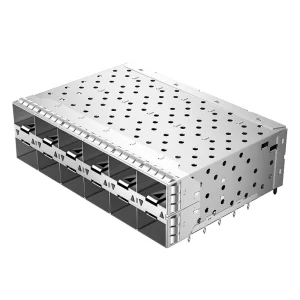
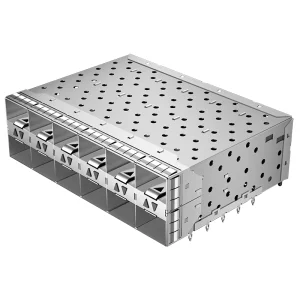
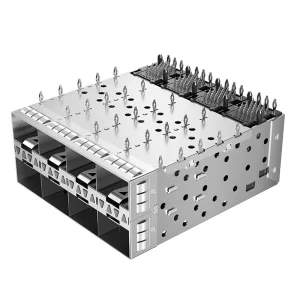
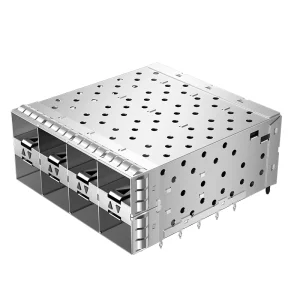
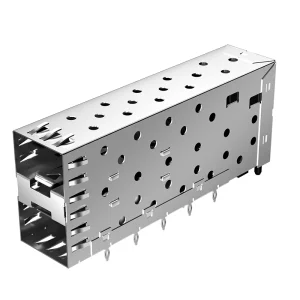
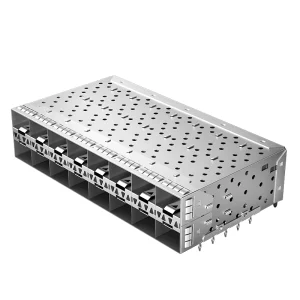
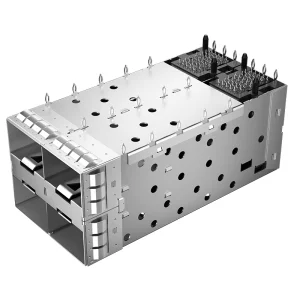
As global networks migrate toward higher data rates and reduced footprints, the demands on physical interconnect systems have intensified. The Stacked 2xN (Stacked Ports) SFP Cage represents a critical technological milestone, doubling the line-card port density compared to single-row configurations.
By arranging ports in a stacked upper and lower row, system architects can maximize faceplate utilization in 1RU (Rack Unit) switches, routers, and host channel adapters. However, stacking optical modules introduces severe engineering challenges: high thermal accumulation, increased susceptibility to electromagnetic interference (EMI), and the need for strict compliance with high-speed differential signal integrity standards (such as SFP28 operating at 25 Gbps per channel and beyond).
Zyqora’s portfolio of 2xN stacked SFP cages addresses these constraints through optimized structural stamping, high-performance elastomeric or metal-finger EMI shielding, and thermal venting channels designed to ensure optical transceivers operate within safe temperature parameters.
How high-density interconnection systems are transforming cloud infrastructure and telecommunication systems worldwide.
With the surge in generative AI workloads, data centers are moving to dense configurations of leaf-spine architectures. Stacked 2xN structures allow developers to maximize the throughput of switches within identical physical footprints.
Distributed Units (DUs) and Centralized Units (CUs) at remote radio heads require ruggedized, stacked SFP cages capable of operating in non-climate-controlled environments. High mechanical retention and anti-vibration features are essential.
Traditional copper links (DACs) are reaching physical limits. The industry is rapidly switching to optical engines and Active Optical Cables (AOCs), which generate more heat. This change demands specialized stacked cages with integrated thermal heat sinks.
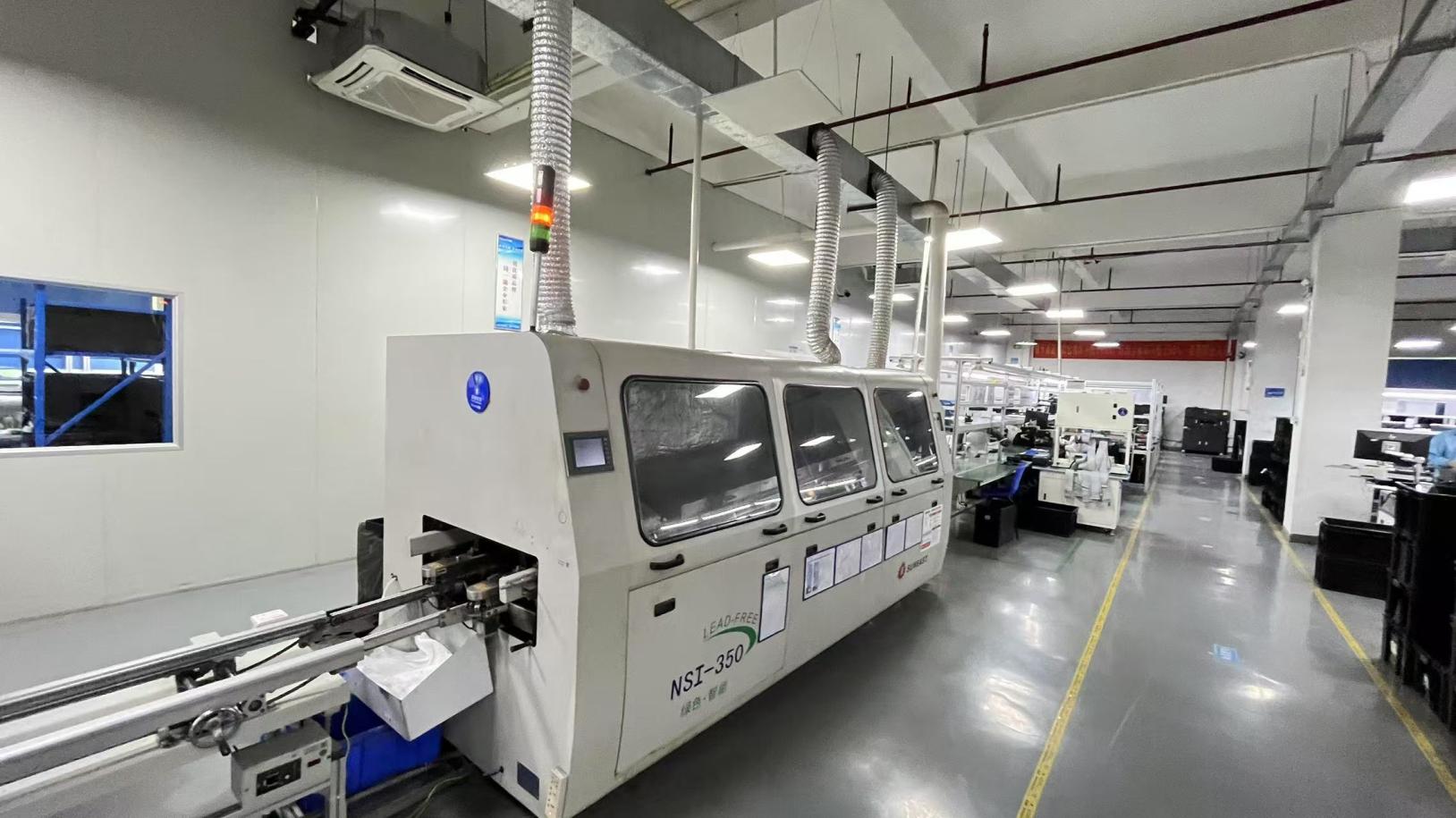
As a global hub for telecommunications manufacturing, China's optical interconnect supply chain provides unparalleled efficiency, cost-optimization, and rapid scalability.
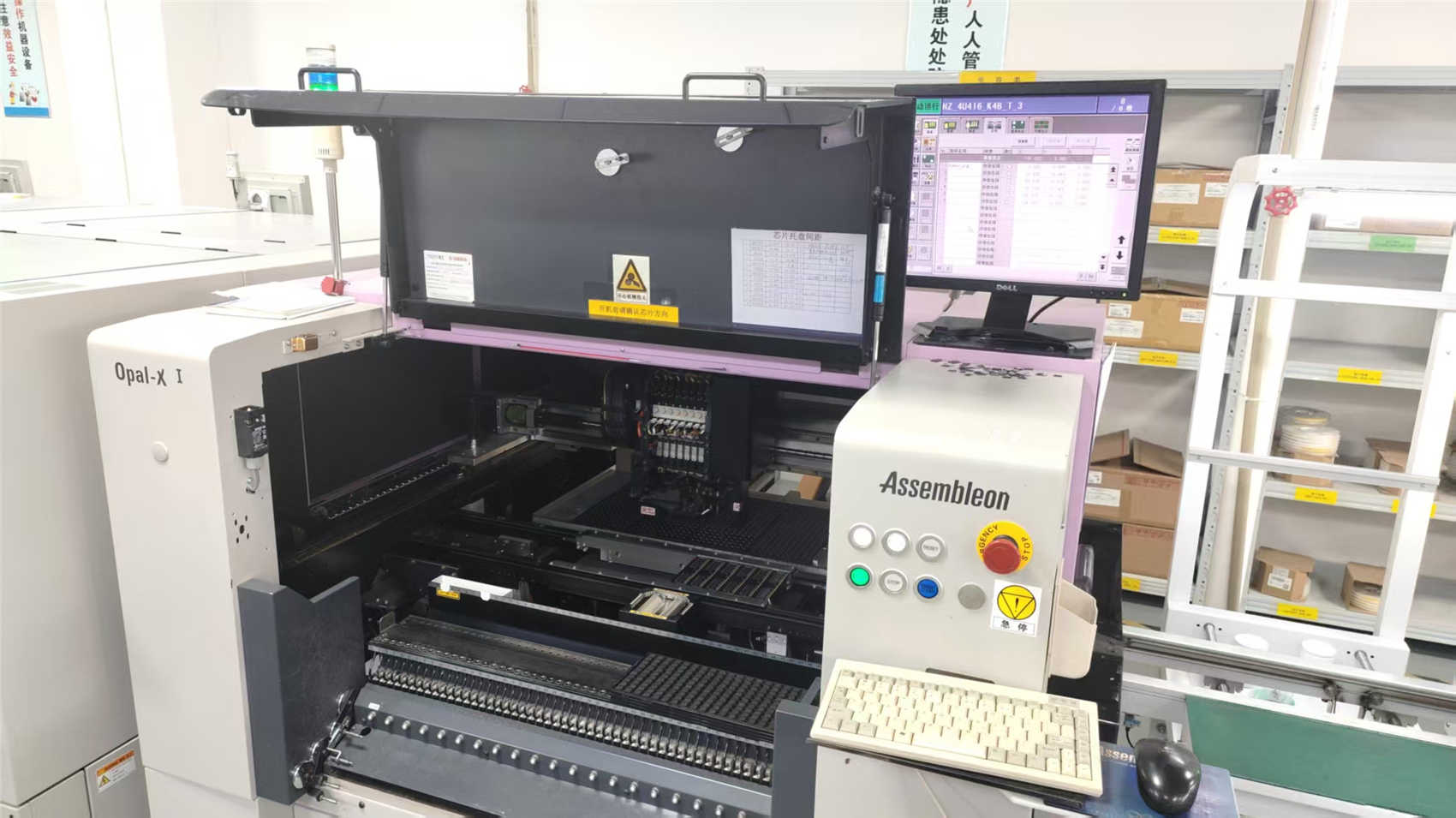
At Zyqora Optical Technologies, our production facilities combine state-of-the-art tooling with highly automated assembly systems to produce high-precision 2xN stacked SFP/SFP+ cages. The core manufacturing advantages include:
Stacked 2xN ports are engineered for deployment in diverse hardware platforms. Understanding the specific constraints of each application environment ensures long-term reliability and signal compliance.
| Application Scenario | Common Port Layout | Required Feature Set | Applicable Standards |
|---|---|---|---|
| Enterprise Edge Switches | 2x4, 2x6 stacked ports | Standard light pipes, press-fit terminals, elastomeric gaskets for low EMI | SFP+ MSA, IEEE 802.3ae |
| Hyperscale Cloud Core Routers | 2x8, 2x12 high density | Integrated zSFP+ style connectors, thermal heat sink clips, metal EMI fingers | SFP28, SFF-8402, IEEE 802.3by |
| Industrial Edge & Telecom Base Stations | 2x1, 2x2 compact arrays | Ruggedized shells, anti-corrosion gold plating, through-hole solder options | SFF-8432, GR-63-CORE (NEBS) |
| Storage Area Networks (SAN) | 2x6, 2x8 high speed | Ultra-low crosstalk, optimized PCB footprint, integrated connector pin layouts | Fibre Channel (FC-PI-6) |
For engineers, choosing between a light pipe and *non-light pipe* stacked cage is critical. Light pipes direct LED status signals from the host PCB to the front panel, providing clear port-status monitoring for technicians. However, for applications where EMI is a critical risk, using cages with metal-finger shielding around the light pipe entries is necessary to prevent high-frequency radiation leakage.
Global procurement teams and system integrators face severe challenges when sourcing interconnect components. Variations in tolerances can lead to PCB damage during the press-fit process or intermittent contact issues in the field. When sourcing Stacked 2xN SFP Cages, procurement managers must evaluate several key quality criteria:
All cages must adhere to Multi-Source Agreements (MSAs). This guarantees that transceivers from any compliant manufacturer (e.g., Finisar, Cisco, Juniper) can be hot-swapped without mechanical binding or loose fits.
Compliance with RoHS (Restriction of Hazardous Substances) and REACH is a non-negotiable requirement for entering European and North American markets. Cages must be built with lead-free, non-toxic materials and withstand high-temperature storage conditions.
A professional manufacturer and supplier of high-performance optical transceivers and fiber connectivity solutions for global telecom, data center, and cloud networks.
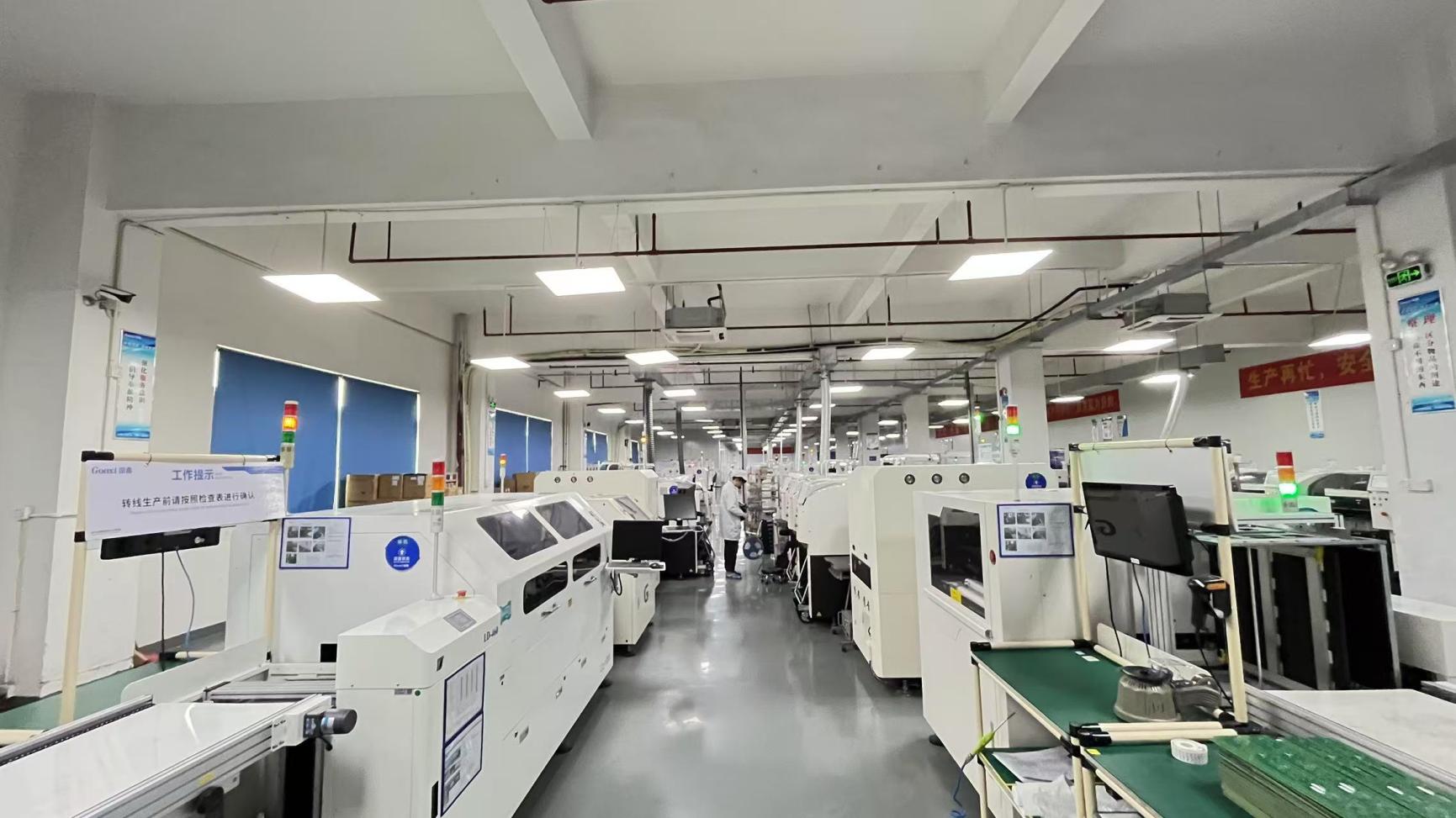
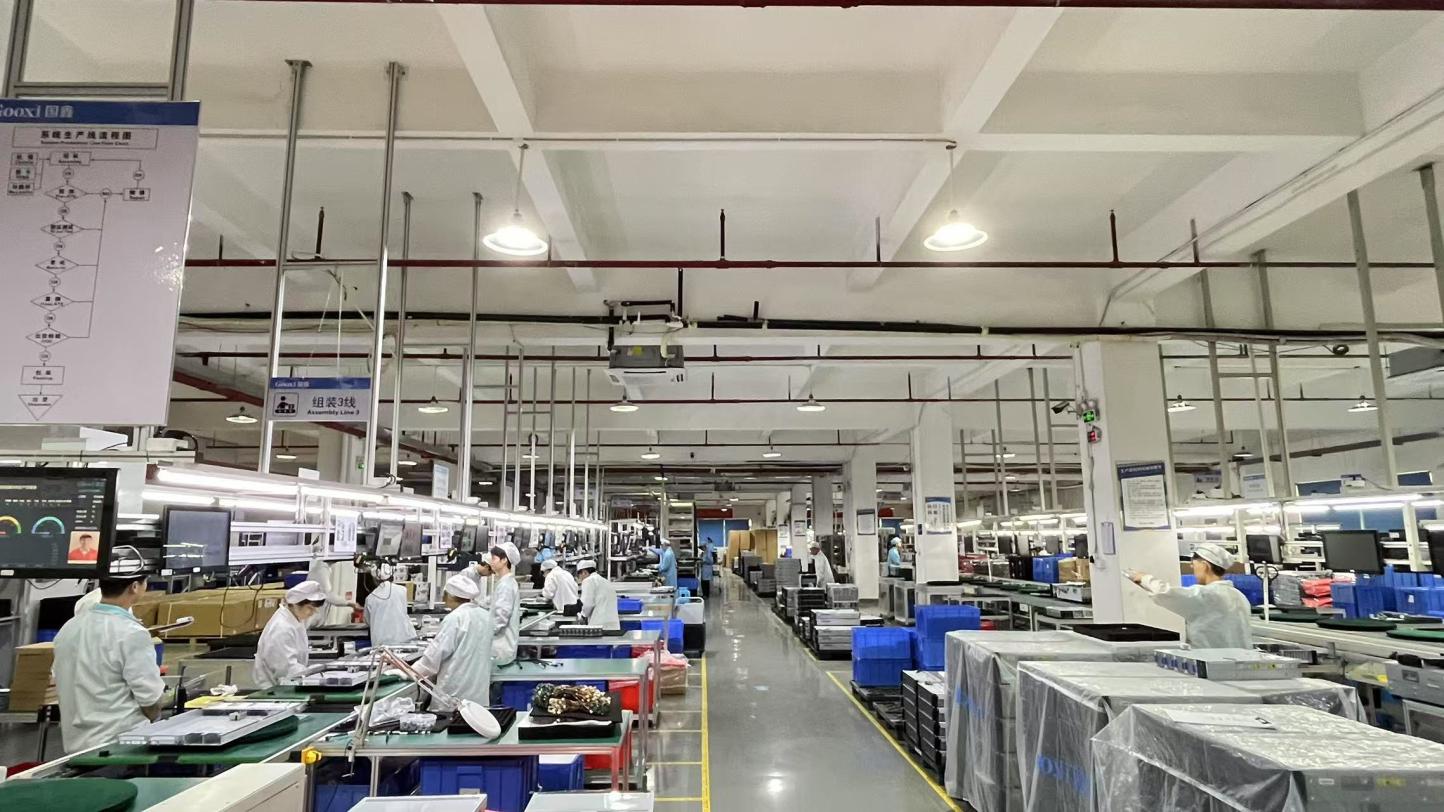
Founded in 2016, Zyqora Optical Technologies Co., Ltd. is a leading provider of high-speed interconnect products. With a modern, highly specialized production facility covering 386 square meters, we design, develop, manufacture, and test high-precision networking components.
Our comprehensive portfolio includes SFP, SFP+, SFP28, QSFP28, QSFP-DD, OSFP, AOC, and DAC solutions. Engineered for seamless compatibility with major international hardware platforms, our products deliver the scalability and durability required by modern computing environments.
Over the years, Zyqora has built an extensive global footprint, reaching an annual export revenue of over USD 18 million. Backed by 8 years of export experience and 10 years of deep industry expertise, we serve telecom operators, system integrators, data center providers, and IT distributors across North America, Europe, Southeast Asia, the Middle East, and Latin America.
Quality control is central to our manufacturing process. Our facility employs a specialized team of 42 quality control professionals who manage rigorous quality checks: incoming material inspection, optical performance testing, high-temperature aging tests, compatibility testing on mainstream switches, and final pre-shipment inspections. This process ensures that every batch meets rigid international quality and safety metrics.
To support customized requirements, our research and development department consists of 65 experienced engineers specializing in high-speed optical transmission and mechanical structure design. Last year alone, Zyqora launched 168 new products, helping clients update their system architectures. We offer full OEM and ODM services, including custom labeling, firmware coding, customized packaging design, and mechanical drawing customization.
Answers to technical and commercial questions regarding stacked SFP cages and procurement.
The primary advantage is port density. A Stacked 2xN SFP cage allows system designers to place twice the number of ports in the same horizontal width on the PCB. For instance, in a standard 1U switch, using a 2x6 stacked cage allows 12 ports to fit into a space that would only accommodate 6 single-row ports. This is critical for data centers attempting to maximize throughput per rack unit.
Press-fit (compliant pin) termination uses elastic "Eye-of-the-Needle" pins to form a high-pressure, gas-tight connection inside the plated through-holes of the PCB. This avoids the thermal stress of wave soldering, which can warp high-density multi-layer boards. It also facilitates easier field replacement and rework, as the cages can be pressed out and replaced without desoldering.
While sharing similar form factors, zSFP+ (zero-loss SFP+) cages are engineered for higher data rates, supporting up to 28 Gbps (SFP28) or 56 Gbps (SFP56) per channel. They feature optimized internal connector wafer layouts that minimize impedance mismatches and reduce crosstalk at higher frequencies compared to older SFP+ designs (which are typically rated up to 10 Gbps or 16 Gbps).
Light pipes require openings in the cage structure to route light from the PCB LEDs to the front bezel. If not designed correctly, these openings can release electromagnetic radiation. To counteract this, premium cages utilize grounding tabs, metal shields, or elastomeric gaskets around the light pipe channels to maintain ground continuity and meet FCC Part 15 and EN55022 limits.
Yes. Supported by our R&D team of 65 engineers, we offer customized options including custom light pipe shapes, unique heat sink configurations, specialized press-fit pin lengths, customized labeling, and customized outer packaging. We released 168 new customized products last year to meet specific client requests.
Select from our high-performance 2x1, 2x2, 2x4, 2x5, and 2x8 port arrays optimized for next-generation network hardware.