Zyqora
Zyqora
Zyqora
Designed for immediate integration with major OEM systems in Poland's enterprise, power utility, and metro access networks.
Poland has emerged as Central Europe's powerhouse for industrial manufacturing, transport logistics, and tech innovation. With key economic clusters like the Katowice Special Economic Zone, the Baltic maritime hubs in Gdańsk and Gdynia, and extensive infrastructure initiatives such as the PKP PLK railway signaling digitization, the demand for stable communication links is soaring.
While the consumer internet market pushes towards high-speed 100G and 400G backbone structures, critical industrial sectors continue to rely on the robust, deterministic nature of 155M (Fast Ethernet / STM-1) and 622M (STM-4) technologies. These speeds remain the standard for SCADA systems, substations, long-reach railway track telemetry, and regional transmission links because they operate with lower latency overhead, consume less power, and exhibit incredible tolerance to electromagnetic interference.
Unlike standard IT infrastructure, telecontrol networks in Poland (such as those managed by PGE, Tauron, and Enea) require legacy SDH/SONET structures for deterministic latency. Substituting these with over-provisioned Ethernet hardware introduces packet jitter which threatens power grid synchronization.
Seamlessly matching Eurobalise and PKP PLK level crossing control transceivers operating under harsh temperature conditions (-40°C to 85°C).
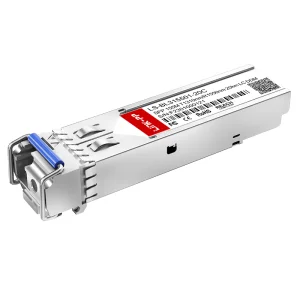
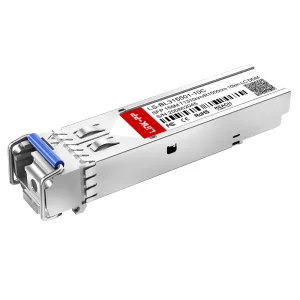
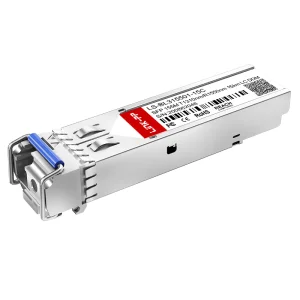
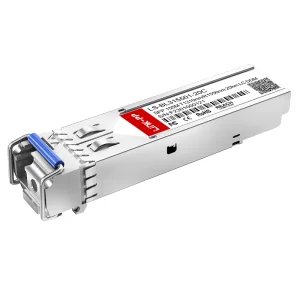
Linking offshore Baltic wind turbines to onshore power converters using specialized single-mode BiDi SFP modules over extended 40km to 80km spans.
Supporting Moxa and Hirschmann field switches inside underground mines in Upper Silesia where optical links must resist vibrations and extreme humidity.
Analyzing supply chain reliability, compliance requirements, and bilateral trade dynamics.
The global market for optical transceivers is undergoing massive transformation. Sourcing reliable 155M/622M SFP modules has become complex for procurement managers in Poland. Many tier-one brands have designated these legacy speeds as End-of-Life (EOL), forcing companies to buy expensive old stock or risk compatibility issues.
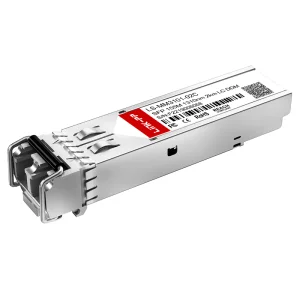
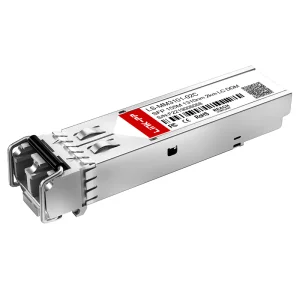
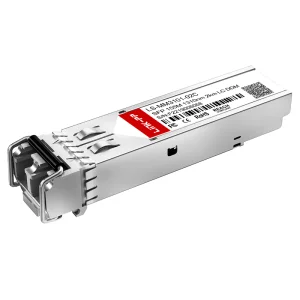
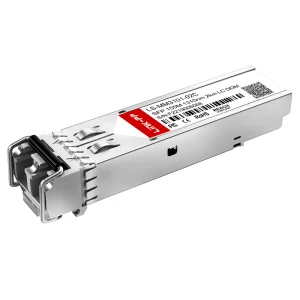
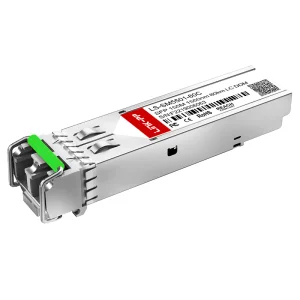
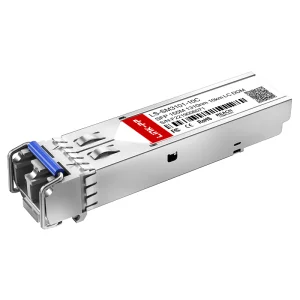
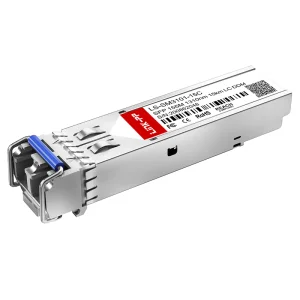
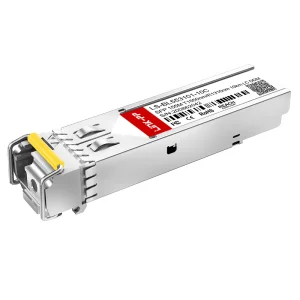
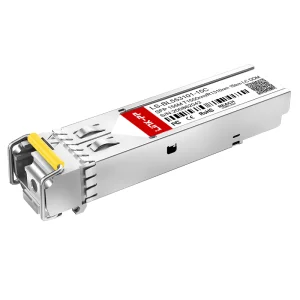
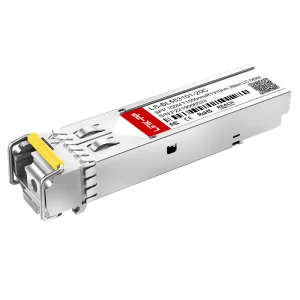
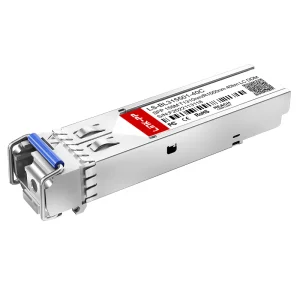
As a leading exporter to the European Union, Zyqora bridges this gap by continuing production of high-specification 155M and 622M SFP modules. Our manufacturing lines operate under strict quality management systems matching CE, FCC, RoHS, and REACH criteria, ensuring that imports into Poland clear custom procedures with zero friction.
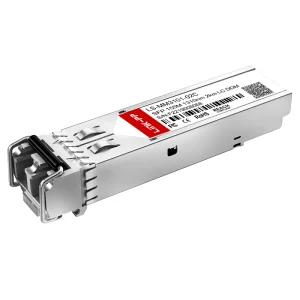
| Parameter | 155M SFP Specifications | 622M SFP Specifications |
|---|---|---|
| Data Rate Range | 100 Mbps to 155 Mbps | 155 Mbps to 622 Mbps |
| Supported Protocols | Fast Ethernet, STM-1, OC-3 | STM-4, OC-12, Metro Link |
| Fiber Type Support | MMF (OM1/OM2), SMF (G.652) | SMF (G.652, G.655) |
| Wavelengths | 1310nm, 1550nm, CWDM, BiDi | 1310nm, 1550nm, BiDi (1310/1550) |
| Distance Options | 2km, 10km, 20km, 40km, 80km | 2km, 15km, 40km, 80km, 120km |
| Diagnostic Support | DDM / DOM (SFF-8472) | DDM / DOM (SFF-8472) |
Maintaining compatibility while transitioning towards modern automation architectures.
Many system designers in Poland ask how long 155M/622M SFP modules will remain viable. The roadmap for industrial communications suggests that these legacy form factors will continue to be deployed well into the 2030s due to the high replacement costs of industrial switch installations. Field equipment, like RTUs (Remote Terminal Units) and PLCs (Programmable Logic Controllers), is designed for 15-to-20-year lifecycles. Therefore, the optical physical layer must remain stable and available.
Zyqora’s development roadmap ensures that our legacy SFP line benefits from modern manufacturing innovations. By using advanced silicon-optical assembly methods, we have reduced the power consumption of our 155M transceivers to less than 0.8W. This lower power output keeps heat generation inside sealed outdoor enclosures at a minimum, extending the lifespan of the host hardware installed along Polish transit networks and utility corridors.
Founded in 2016, Zyqora Optical Technologies Co., Ltd. is a professional manufacturer and supplier of high-performance optical transceivers and fiber connectivity solutions for global data center, telecom, enterprise network, and cloud computing applications.
With a modern production facility covering 386 square meters, Zyqora specializes in the design, development, manufacturing, and testing of optical communication products, including SFP, SFP+, SFP28, QSFP28, QSFP-DD, OSFP, AOC, and DAC solutions. Our products are engineered to deliver reliable performance, scalability, and seamless compatibility with mainstream networking platforms.
Over the years, Zyqora has established a strong international presence, achieving annual export revenue exceeding USD 18 million. Backed by 8 years of export experience and 10 years of industry expertise, we serve customers across North America, Europe, Southeast Asia, the Middle East, and Latin America.
Quality is at the core of everything we do. Our manufacturing process is supported by comprehensive quality assurance procedures, including incoming material inspection, optical performance testing, aging tests, compatibility verification, and final product inspection. A dedicated team of 42 quality control professionals ensures that every product meets international standards and customer expectations.
As a company with both manufacturing and international trading capabilities, Zyqora has built a reliable supply network with more than 860 supply chain partners, enabling efficient sourcing, stable production, and flexible delivery schedules. Zyqora offers comprehensive OEM and ODM services, including customized labeling, firmware coding, packaging design, and product specification development.
Our R&D department consists of 65 experienced engineers specializing in optical communication technologies, high-speed transmission systems, and network interoperability solutions. Through continuous innovation and strict quality management, Zyqora remains committed to providing cost-effective, reliable, and future-ready optical networking products for customers around the world.



Direct answers from our engineering division regarding deployment, standards, and compatibility.
Yes, in many cases, but it depends on the switch's configuration. Some switches require you to manually configure the port speed to 100Mbps (Fast Ethernet) to establish a link. Our engineering team pre-programs the SFP configuration register to report appropriate capabilities, ensuring standard compatibility with industrial host switches deployed across Poland.
DDM monitors real-time parameters such as optical output power, optical input power, temperature, laser bias current, and transceiver supply voltage. In remote utility locations across Poland, DDM allows central management systems to identify fiber degradation or laser aging before a complete link outage occurs, making maintenance proactive and lowering operational costs.
We maintain a comprehensive laboratory equipped with historical and modern host devices from top OEMs (such as Siemens, Cisco, and Nokia). Each batch of 155M/622M SFPs undergoes strict physical compliance testing, verifying that optical rise/fall times and eye diagrams conform to ITU-T G.957 standards for STM-1/STM-4 transmission.
For standard models, we maintain a rolling inventory of components to dispatch orders within 5 to 7 business days. We provide customizable labeling, customized firmware coding, and customized packaging options to support local distributors and system integrators in Poland looking for white-label or OEM solutions.
Browse our full range of single-mode, multi-mode, and BiDi SFP transceivers. Custom specs available upon request.